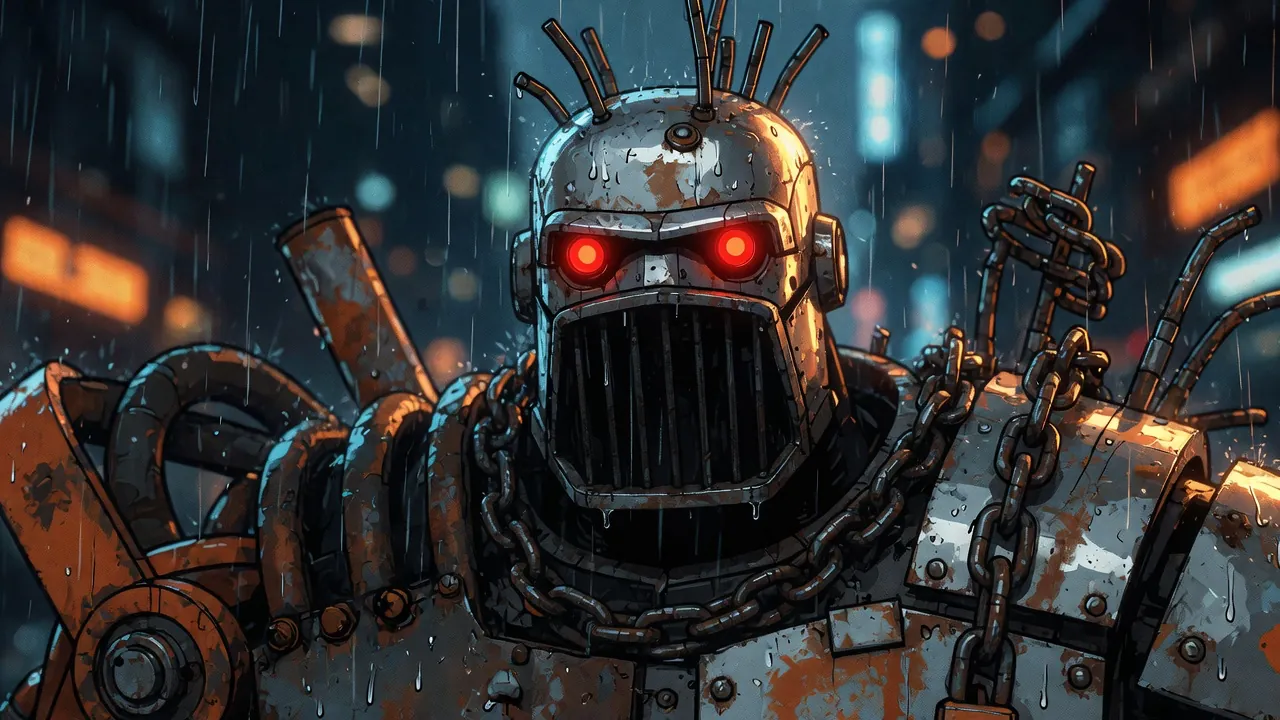
Extreme close-up of the Toll's grille mouthplate and red sensor eyes, rain on his rusted plates.

Bestiary

What the city sends at a Legend, who sends it, and how to tell the senders apart.

One chassis family, three custodies

Nearly every machine on the street is the same kind of machine. Who holds it makes the difference.

The same machine can be a Chrome Dogs pet, a Meridian Security unit or a Bleedthrough construct, and the silhouette does not tell you which. You tell them apart by who holds them.

Three custodies
CustodyWho holds the machineHow you can tell
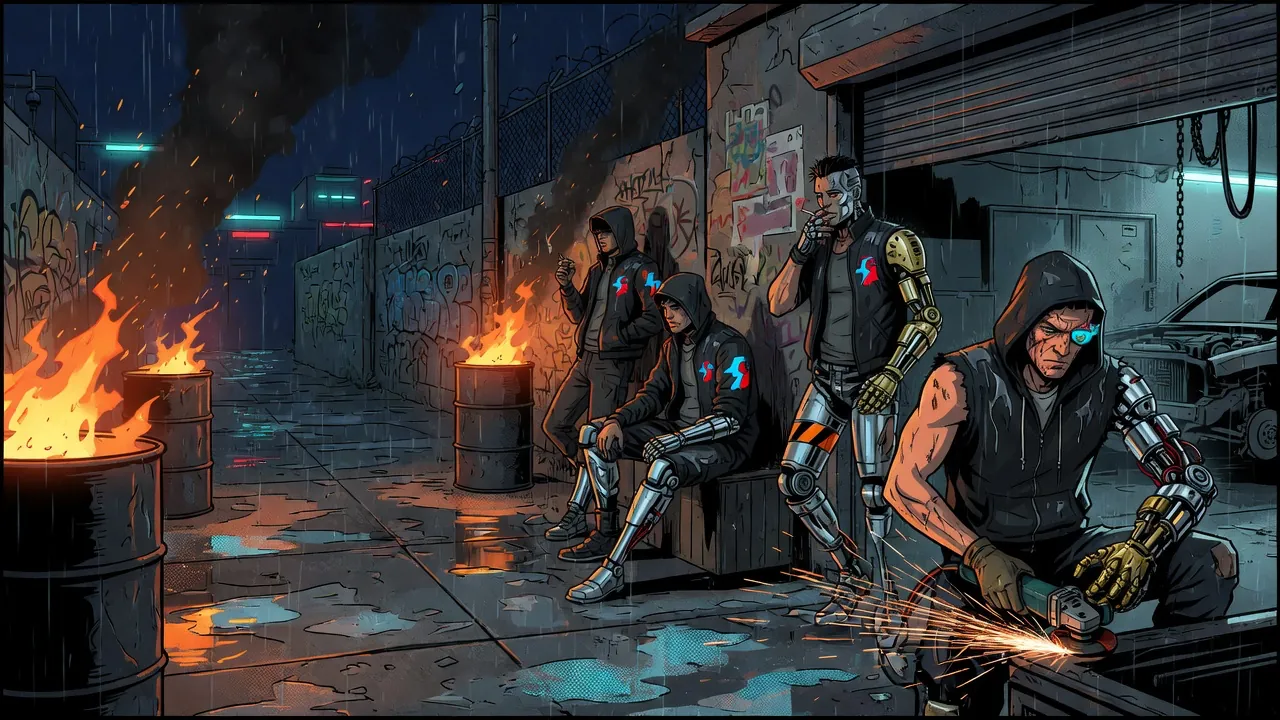
StreetChrome DogsA chassis a pack has chopped, collared and pointed at something.
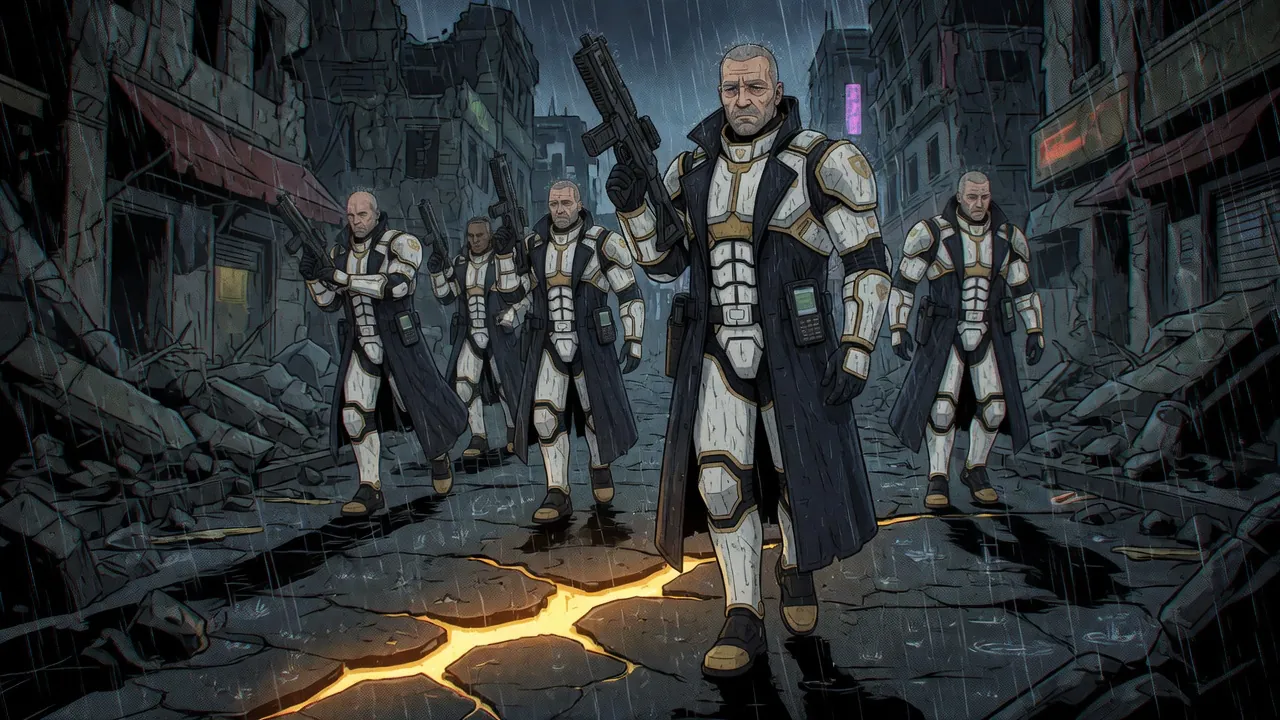
StateMeridian SecurityThe same class of machine under a writ, maintained, with a job code.
SealBleedthroughThe same machine with nobody driving.

Two kinds of body

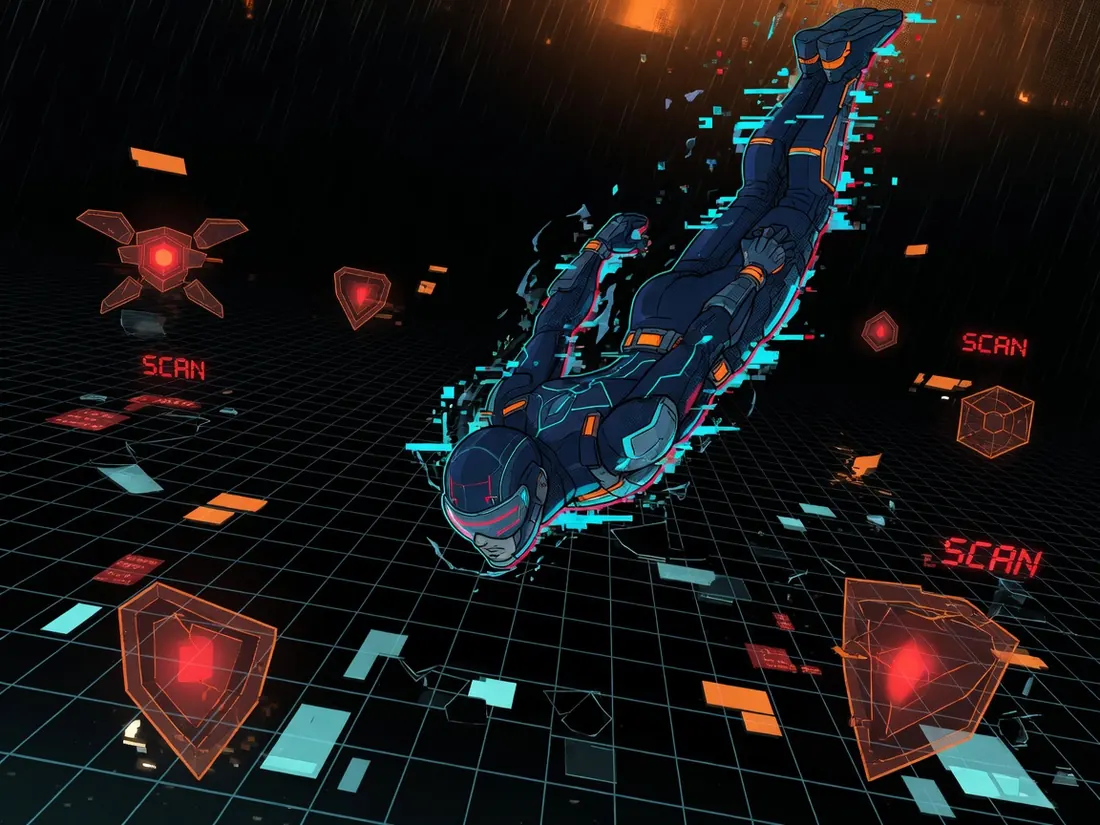
Down in the Lattice, ICE is light: holographic bodies with glowing cores, drawn on the grid.

Up on the street nothing is projected. The machines are real, and nothing about them glows like ICE.

Street, state, Seal

Partly built The Wick runs this escalation in the development build. Overpass Fields and Breaker Rows are mapped and have no enemies yet.

As the heat rises a different power answers, and the Fringe's three districts show it in order.

Who holds each district of the Fringe
DistrictWho holds itWhat it says of itselfStatus
The WickChrome Dogs"Nobody's coming. So."Partly built
Overpass FieldsMeridian Security"They watch the road. Nobody watches under it."Mapped
Breaker RowsBleedthrough"Row Six is still Row Six."Mapped

How the codex reads

Every ICE entry carries two names. The formal name is the job the machine was built for, and the street name is what the people who came back from it called it.

An entry starts from the job the unit was built for. What makes the unit wrong is that the job is still being done correctly, and nobody has told it the work is over.

Many entries end with a habit. Crews knock on a plate, count out loud or let the first one go. These are practices that kept people alive, and the street does not call them beliefs. The entries for the Lattice's units are on ICE.

Street machines

Municipal and industrial kit the city built for itself and then stopped maintaining, plus one Habitation Trust contract.

Partly built These five are in the Wick's enemy deck in the development build.

Each entry gives both of its names.

Scrap Ratthe Tithe

It works the low ground and returns what it finds to the melt. Everything you dropped was findable.

Named
On the Wick contract boards, from jobs quoted less the tithe.
In a fight
It steals what you dropped and runs for the nearest drain grate. Catch it and the loot bursts back out. It is the unit that punishes standing still.
Habit
You let the first one go.

HopperPothole

It seats road plate by dropping on it from height. It has stopped checking whether the plate is a plate.

Named
By the Municipals' incident file, which logged the first reports as road defect. A Municipal sergeant has never taken the filing back.
In a fight
A crouch is the tell, then a leap and a landing blast. Look up: Hoppers arrive over cover.
Habit
Street crews call the crouch out loud.

CrawlerWallpaper

It reads a wall by tapping it. It has never cared which way the wall is facing, or that you are on the other side.

Was
A facade inspector that tapped walls block by block and reported to a Habitation Trust address that stopped accepting post around the Turn.
Named
By Wick tenants, because you do not see it until it moves. The Trust says the livery is counterfeit.
In a fight
It climbs facades and ceilings and attacks from them, which makes the buildings themselves hostile ground.
Habit
You knock the ceiling once before you sleep.

StingerFlakjacket

One dive, one strike, back to cruise. It was built to hit a thing that was holding still.

Named
A clerk misfiled a Skybreak flyer's report, and flyers have used the clerk's version ever since.
In a fight
A rising whine and a lock reticle, then the dive. It never catches a Legend who is boosting, so it punishes hovering. See Strain.

Cable Viperthe Lanyard

It takes the far end and brings it home at a rate that will not part the cable. It has never dropped anyone.

Named
By Yards riggers, who say the name is cruel because it is accurate.
In a fight
It tethers a Legend in the air and reels them in. A Legend breaks free by cutting the cable, spending a movement burst or killing it. It is there so that flying is not always the answer on the street.
Habit
Riggers clip a lanyard to nothing before a Wick run.